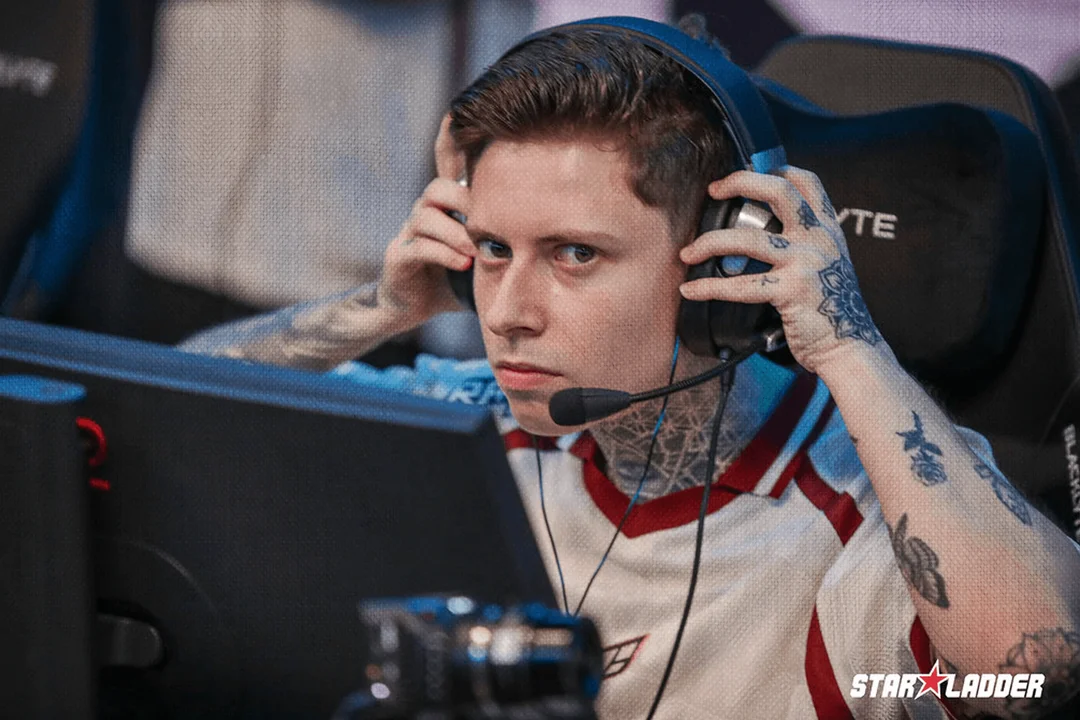
JDC and Chr1zN are two successful products of the Counter-Strike academy system, but with the loss of the WePlay Academy League and the implementation of VRS, the duo no longer think there's a place for academy teams in CS
Just seven months its announcement, Vitality have shut down their CS2 academy team, with the project becoming the latest in string of failures for big organisation academy teams after Falcons closed theirs last week.
These annoucements come after we got to sit down with BIG's JDC and HEROIC's Chr1zN - two successes of the early academy system - to dicuss what their time in MOUZ NXT did for them and why people might not have so much success in the future.
With the loss of the WePlay Academy League following the breakout of war in Ukraine academy teams have struggled to have a place to shine, a problem that the duo says has only been exacerbated by the implementation of the VRS system.
So, with Vitality and Falcons closing down their projects, why do other teams still insist with theirs, and what makes those projects consistently more successful than the others who try to jump on the bandwagon?
The frail state of academy CS in 2026
I want to start with your time in the academy, talking about the academy scene in general and how things have gone over time, both looking to the past and at the potential future. I want to ask both of you to talk about your time in those academy structures: how did you get there, and what was it like?
Chr1zN: We've both been in the same place, so that makes it a bit easier. For me, at the academy, I was very young, of course, 15, and I hadn't really played professional CS at that point.
So I think it was really good because I got a sense of what the structure looks like, what it actually takes, and whatnot. It was an easier way to ease into it without all the pressure you would usually get.
JDC: I think the academy system was probably one of the best things that was introduced into pro play. I joined MOUZ NXT back in the day as a more experienced piece already. I was playing full-time at that point for two, nearly three years.
But like you said, it made the scene way easier to join. It made it way more welcoming for everyone, and you can get a feeling of how it is to be a pro without just being overwhelmed by this fucking big - sorry if I'm cursing right away. I like to curse.
But it's just a beautiful thing to add to the scene. I had a very great experience, obviously. We were a dominant academy team at that time. We had amazing pieces everywhere, so it was very good.

Obviously, WePlay's Academy League has closed. Do you think the academy scene needs an academy league to thrive? What enables an academy team to thrive, especially in the current environment with one big option closing?
Chr1zN: For organisations and whatnot, I feel like it has to be there because it gives the incentive to have the academy team. You get to actually show your talents in maybe a more mainstream setting, so they get out more to the public.
Sometimes, especially with the way the VRS system works, it's a little hard to keep track of all the games and where to find them. There are a lot of good young players out there, so it's not because you don't have the talent. It's more about, of course, probably finances and all these things.
For organisations and whatnot, I feel like [WePlay Academy League] has to be there because it gives the incentive to have the academy team.
JDC: For sure. You said it perfectly. I have to say, he said it perfectly. As an academy team, you need some place to be presented, and open qualifiers and all those online officials are not really a place where people are watching, I would say.
Of course some are interested and some are fans, but you need a promotion space, and WePlay was that. Everyone was watching WePlay. If you were looking for talents, you would check WePlay because the names there—I mean, every name that came from WePlay is fucking huge. So you're completely right.
How would you go about trying to scout new players now, if there aren't those academy leagues anymore? There might be some random one-offs every now and again, but there's no real academy league. How would you spot new players or new talent?
Chr1zN: I think it's a bit of a mixture. Nowadays people are getting on HLTV a little earlier, so you get a sense of: okay, this 15- or 14-year-old is dropping a 1.30; he's doing something right. You go and check some demos of him, of course, and scout that way.
But sometimes I get queued on FACEIT with people where I'm like, okay, he's a little too good for a 13-year-old, maybe, this guy. Then you start following along, seeing over the next couple of years if it actually turns into something, because of course it's hard to tell.
You need to follow along a little more in the journey, so to say.
JDC: It's very well said again. The most obvious one is you open HLTV stats, and you check the statistics of whatever opposition he's playing against, and you check for age. You see what's standard or not.
But what he's saying is very good: on FACEIT, especially if you look at the leaderboard, you can check for names. Maybe you don't know the name. He's a young guy, he's playing a lot, and then you can follow along, like you said. Put a track record on the name and just see.
Is it about being proactive and being aware that, to find the next talent, you need to be looking for it? It's not just going to appear.
Chr1zN: Yeah, for sure. Definitely.
Do you think the academy route is still a viable path in pro CS in 2026?
JDC: It's very difficult because it really depends on what academy team you join. If you look at MOUZ, for example, nearly all the players are from the academy. So I guess if you join MOUZ NXT, there's some chance that you will be promoted at some point.
In other orgs, it could be difficult. If you join Vitality Academy, it's like, okay, maybe you can get attention there, but how likely are you to join the main team? You know what I mean?
If you join Vitality Academy, it's like, okay, maybe you can get attention there, but how likely are you to join the main team
Chr1zN: For myself as well, speaking back in the day, of course I didn't join the main team, but I still got a chance somewhere else. So I think it is viable in that sense.
But as you said, it's maybe a little unlikely to think that it's a direct path to being on main teams. Of course, there are some people who are going to come along who are just that good, simply. But for most, it's a nice stepping stone to take the next step and actually get into more of a tier-two team.
So I think it is viable. It's just a little hard because you don't have so many at this point.
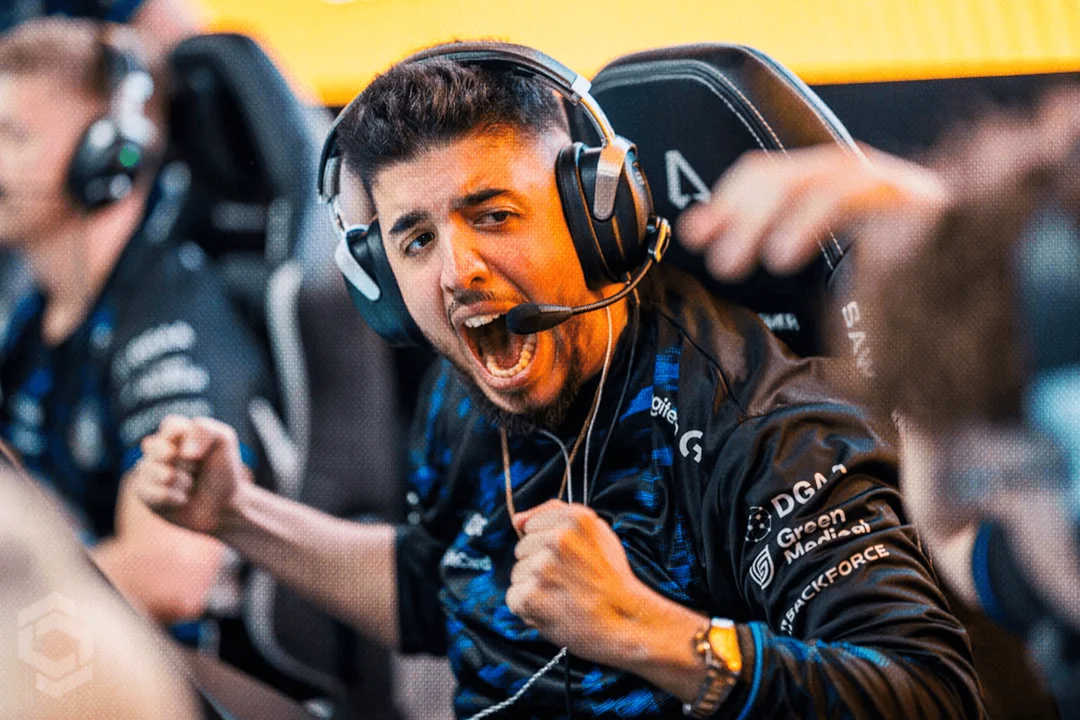
We've seen MOUZ, Spirit, and FUT all have success with academy teams. Do you think more teams should be using them, or should more teams be using them more effectively, like MOUZ have? What's the difference in approach, and how should people be utilising them, if at all?
JDC: That's a very good question. Spirit Academy is a very unique thing because there's a lot of talent from the CIS region, and Spirit is doing a really good job of locking them down early. So that's already a unique pathway.
MOUZ as well - they have the reputation, they have the history with NXT, and nearly every talent is coming from NXT. That goes for you as well, you know.
For the other teams, I think it's in terms of budget, because there are very few players on the market you get for free now who are already somehow proven, or young, who could go into an academy team. Every team will force a buyout on them or not give them away because they're talents.
So I think the scene has really developed in a direction where it's not favouring academy teams that much unless you have resources.
Chr1zN: I think that's well spoken. Also because of VRS, sometimes it's hard to see why you would need to go on an academy team instead of maybe just trying to take your chance with someone who's already within the top 60 or whatever it is, so you get more exposure.
But sometimes the issue with these academy teams not having their own league is the eyes, like we've talked about. You just don't get the eyeballs if you're not playing something that's actually worth watching.
JDC: Exactly.
Why do you think NAVI, MOUZ, and Spirit have had success with their academy teams? Is there anything that could be holding back other ones? They've had very good success, and NXT is a great example of a good success story in terms of academies. I'm curious what your take is.
Chr1zN: For Spirit, as you said before, Jon, I think they also have eight teams.
JDC: Without even being disrespectful.
Chr1zN: At some point, you're bound to have someone come along that's a little better than the rest. But for the others, they definitely have something. I think NAVI also had a bit more teams than one; I'm not sure how many.
FUT is basically still NAVI Academy, right? So of course they also had really good success, and they had b1t, m0NESY, fear, these guys coming through as well. Early on, they're probably also one of the ones to give credit to.
But for me, the most important part about academy teams is that you have a coach who's able to put values into the players early on, so they actually get the mindset and the idea of how the work is to be a professional. Because if you don't get that, it doesn't really matter, in most cases - if you're not donk - how much talent you have.
You need to be able to understand what hours you need to put in. That's where some teams maybe go wrong, where you just don't get that in the same way.
Spirit have like eight teams... At some point, you're bound to have someone come along that's a little better than the rest.
JDC: Very well said again. Probably those three teams are prime examples of good structure, preparing the players for professional play, and making them understand that you have to grind, you have to be in the right headspace, you need to do those things to be successful.
Obviously you have sycrone, who was an academy coach, promoted to the main team; he's a head coach. TOBIZ was an academy coach for a very long time. He did amazing.
I looked at it differently, but you are very right there: the coaching system is extremely important for academy teams to succeed, and they have to have some example to live up to, that you can actually achieve your goals. Very good thinking.
If you'd like to watch the full interview, you can do so by clicking below.